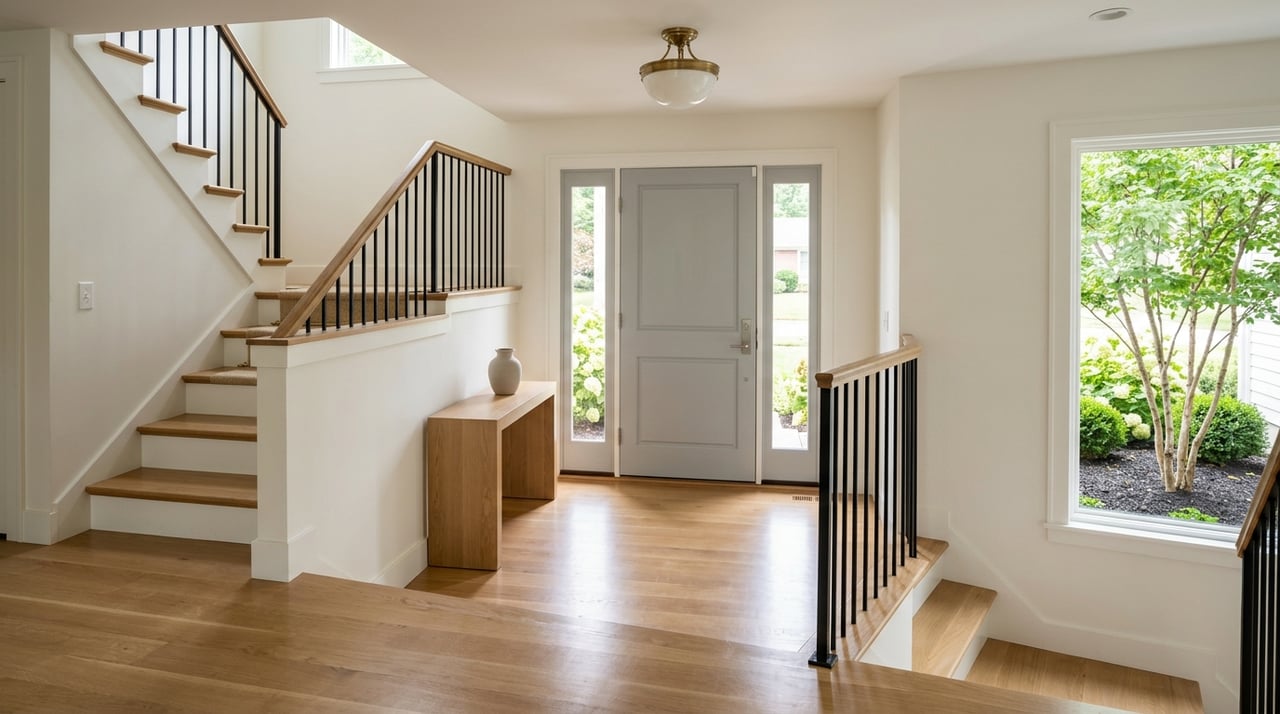
Wondering whether a Colonial or a split-level makes more sense in Glen Rock? You are not alone. In a borough where most homes are owner-occupied, detached, and shaped by decades of established suburban development, the floor plan you choose can affect everything from your morning routine to how the home grows with you. This guide will help you compare Colonial vs. split-level living in Glen Rock so you can focus on the layout that fits your daily life best. Let’s dive in.
Why this comparison matters in Glen Rock
Glen Rock is a town where home style and daily function are closely tied. Census QuickFacts reports a 90.2% owner-occupied housing unit rate, and Glen Rock’s 2025 housing plan says 89.9% of the housing stock is single-family detached. That means many buyers here are choosing between established house types rather than brand-new floor plans.
The age of the housing stock also matters. A 2019 demographic analysis says 86% of homes were built before 1970, with the largest share built in the 1950s at 36.2%. Glen Rock’s development pattern was heavily shaped by postwar suburban growth, which helps explain why Colonials and split-levels remain such common and relevant choices today.
Glen Rock also supports busy suburban routines. The borough has two NJ Transit stations and bus service, and the district includes four elementary schools, a middle school, a high school, and a community school. In practical terms, that means the right home often comes down to how well the layout handles commuting, school mornings, guests, work-from-home needs, and everyday transitions.
What defines a Colonial
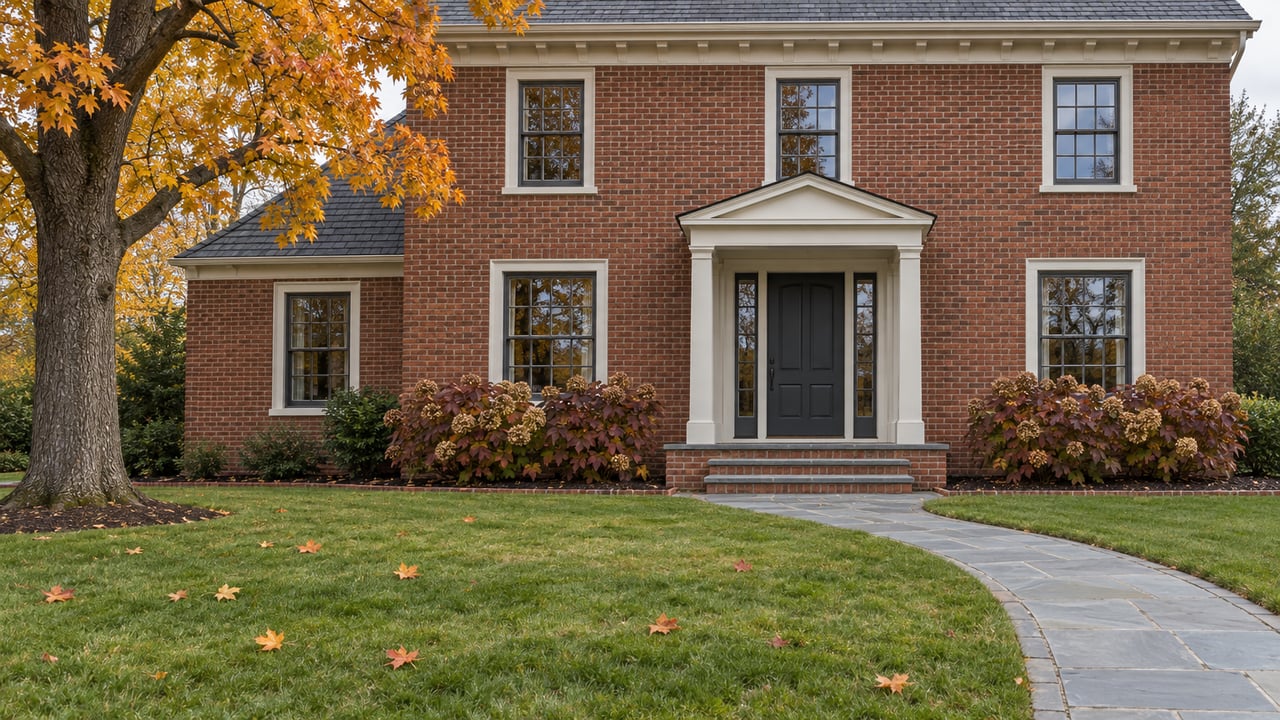
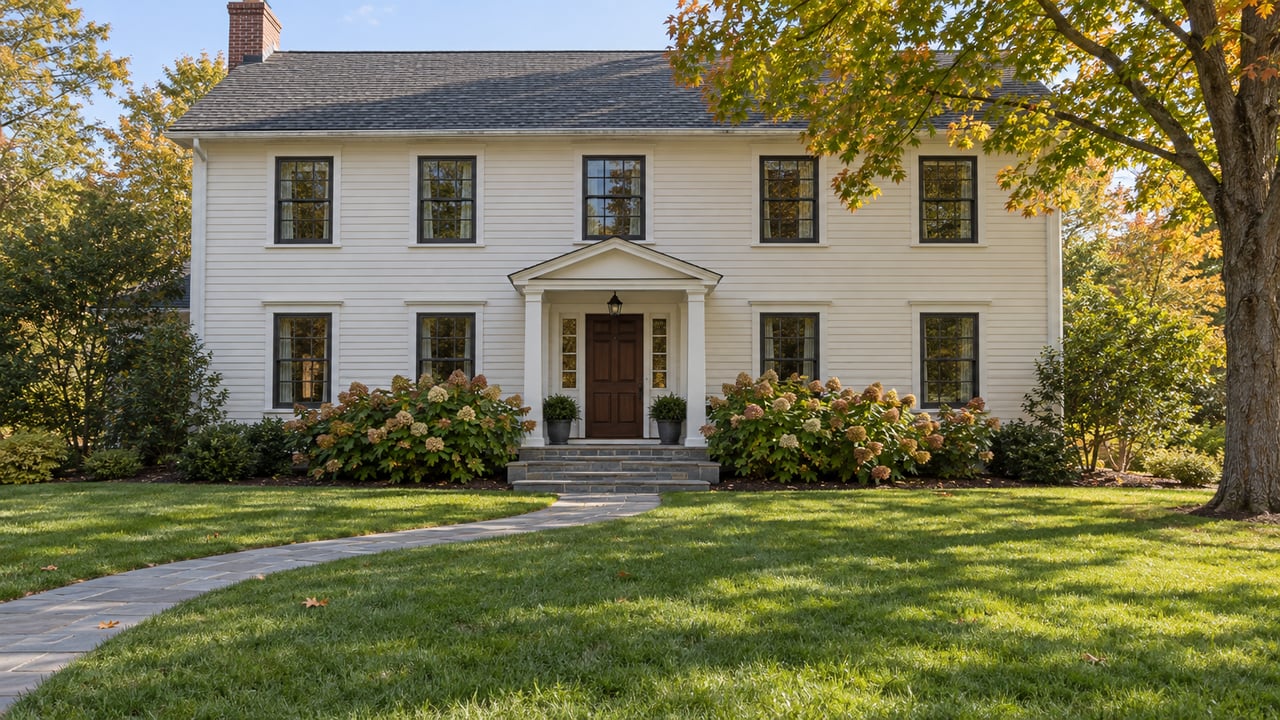
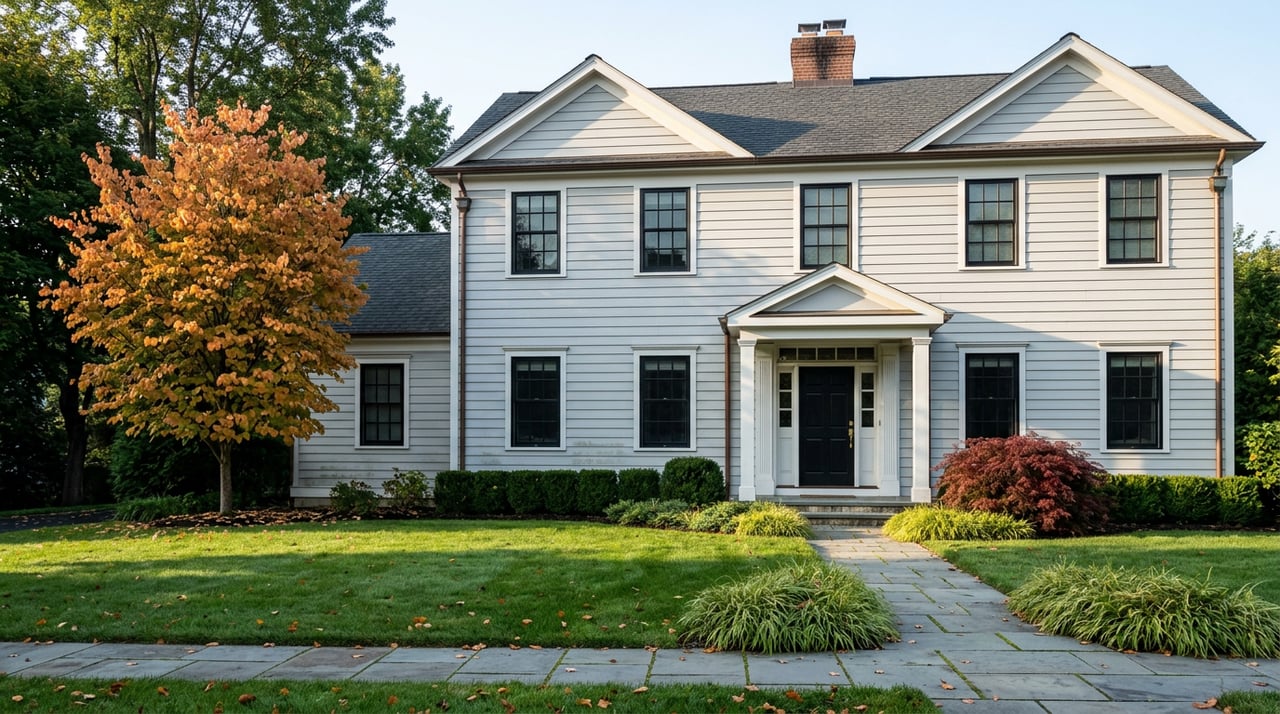
In Glen Rock, a Colonial usually means a Colonial Revival or colonial-inspired home rather than a true colonial-era property. These homes are known for symmetry, prominent entries, and a center-hall layout influenced by earlier Federal and Georgian precedents. You may also see details like columns, pilasters, fanlights, side lights, or Palladian windows.
Inside, the center hall often sets the tone for the whole house. Rooms tend to sit to either side of the hall, and bedrooms are commonly grouped on the level above. The result is a layout that usually feels orderly, traditional, and easy to understand when you walk through it.
How Colonial living feels day to day
A Colonial often works well if you want a clear divide between public and private space. The main floor is usually where entertaining, dining, and everyday gathering happen, while the bedroom level stays more separate. That flow can feel especially comfortable if you like a home with a predictable rhythm.
You may also find that a Colonial offers fewer internal level changes than a split-level. If you prefer moving through one dominant main floor with the bedrooms above, that can be a real advantage. For many buyers, the appeal is not just the look of the house but the way the layout creates structure in everyday life.
What defines a split-level
A split-level is typically a three-level house with staggered floors. According to the National Park Service description in the research, the main living spaces sit on or near grade, the bedrooms are a half-floor up, and the lower level often includes a garage, recreation room, or additional bedrooms. These homes became especially popular in the mid- to late-1950s and were common around New York City.
That timing lines up closely with Glen Rock’s housing history. Since a large share of local homes were built during the 1950s suburban boom, it makes sense that split-levels remain part of the borough’s housing mix. In other words, this style is not an outlier here. It is part of the story of how Glen Rock developed.
How split-level living feels day to day
Split-level homes usually feel more zoned than Colonials. Instead of one main floor and one bedroom floor, you move between half-levels that naturally separate different activities. The main level often becomes the social center, the upper level holds sleeping spaces, and the lower level can absorb noise, hobbies, guests, or flexible use.
That built-in separation can be useful if your household runs on overlapping schedules. One person may be leaving for the train, another may be starting remote work, and someone else may need a quieter area later in the day. In a split-level, the floor plan itself often helps create those boundaries.
Colonial vs. split-level in Glen Rock
If you are deciding between these styles, it helps to think less about labels and more about circulation. The best fit usually comes down to how you move through the house during your busiest hours.
| Feature | Colonial | Split-Level |
|---|---|---|
| Overall feel | Traditional and orderly | Zoned and flexible |
| Main circulation | Center hall with rooms off each side | Half-level transitions between zones |
| Bedroom location | Typically stacked above main level | Usually half-floor above main living spaces |
| Daily rhythm | Clear public vs. private separation | Strong separation of work, play, and rest |
| Best for | Buyers who want a conventional flow | Buyers who want distinct activity zones |
| Common renovation focus | Openness and room connection | Lower-level function and stair flow |
Neither style is automatically better. In Glen Rock, both can work beautifully when the layout matches your priorities.
When a Colonial may suit you better
A Colonial may be the better fit if you want a more traditional setup. Many buyers like the sense of order that comes from a center-hall plan and clearly defined rooms. If you host often, or simply like having your main living spaces grouped together on one primary level, this style can feel intuitive.
You may also prefer a Colonial if fewer level changes matter to you. While every house is different, the standard layout often offers a cleaner separation between entertaining downstairs and sleeping upstairs. That can make the home easier to read the moment you walk in.
When a split-level may suit you better
A split-level may be the better fit if your household benefits from stronger zoning. If you want dedicated areas for remote work, guests, recreation, or different daily schedules, a split-level often gives you that separation by design. The lower level can become a major asset when it is truly functional.
This style can also be appealing if you want more flexibility without losing the feel of a detached suburban home. In Glen Rock, where commuting and school-day routines can shape the entire day, split-level layouts often shine when different people need different spaces at the same time.
Renovation potential in older homes
Because Glen Rock is a fully developed community with an older housing stock, many buyers should think about not only the current layout but also the home’s adaptation to modern living. With 86% of homes built before 1970, updates to circulation, storage, and room connection can matter just as much as square footage.
In Colonials, renovation projects often focus on improving openness and flow. That may mean opening a kitchen to an adjacent room, strengthening the connection between the center hall and the back of the house, or reworking formal spaces so the first floor functions better for today’s routines.
In split-levels, renovations often focus on making the transitions between levels feel intentional. Buyers should pay close attention to the lower level, the stair sequence, and garage-adjacent areas. Those spaces may offer opportunities for a mudroom, office, playroom, or other practical use if the layout supports it.
What to notice during a tour
When you walk through a Glen Rock home, focus on how the layout supports real life rather than how it looks in photos. A beautiful house can still feel awkward if the circulation does not match your routines.
Here are smart questions to ask as you tour:
- How much of the first floor is formal and how much feels open and connected?
- In a split-level, how many half-flights are part of daily movement from garage to kitchen, bedrooms, or lower level?
- Does the lower level function as real living space, or is it mostly storage and utilities?
- Is there enough separation for commuting, school mornings, remote work, or guests?
- Has the home already been updated for modern expectations, or will you need to improve storage, circulation, or room connections?
These questions are especially useful in Glen Rock because the borough’s homes are mostly detached, mostly older, and closely tied to long-established neighborhood development patterns.
The bottom line for Glen Rock buyers
In Glen Rock, Colonials often appeal to buyers who want traditional flow, a strong sense of order, and a clear split between shared space and private space. Split-levels often appeal to buyers who want flexible zones and a layout that naturally separates different parts of daily life. Since both styles are deeply connected to the borough’s postwar housing history, the better choice usually comes down to how you live, not just what style name appears on the listing.
If you want help comparing floor plans, understanding how a specific home functions, or narrowing your search in Glen Rock and nearby Bergen County towns, Till Horkenbach can help you evaluate the details that matter most.
FAQs
What is the main difference between Colonial and split-level homes in Glen Rock?
- Colonial homes usually have a traditional center-hall layout with bedrooms above the main level, while split-level homes use staggered floors to create more separated living zones.
Why are Colonial and split-level homes so common in Glen Rock?
- Glen Rock’s housing stock was strongly shaped by postwar suburban growth, and a large share of homes were built in the 1950s and before 1970, when these styles were widely built.
Which Glen Rock home style is better for commuting and busy schedules?
- The better choice depends on your routine, but split-levels often offer stronger zoning for overlapping schedules, while Colonials often offer a simpler, more traditional flow.
What should you check when touring a split-level home in Glen Rock?
- Pay attention to the half-level transitions, how easily you move from garage to kitchen or bedrooms, and whether the lower level works as usable living space.
What should you check when touring a Colonial home in Glen Rock?
- Look at how the center hall shapes the first floor, whether the rooms feel too formal or comfortably connected, and whether the layout supports modern daily living.
Do older Glen Rock homes usually need layout updates?
- Some do, because most of the housing stock was built before 1970, so buyers should assess circulation, storage, and room connections carefully during the home search.