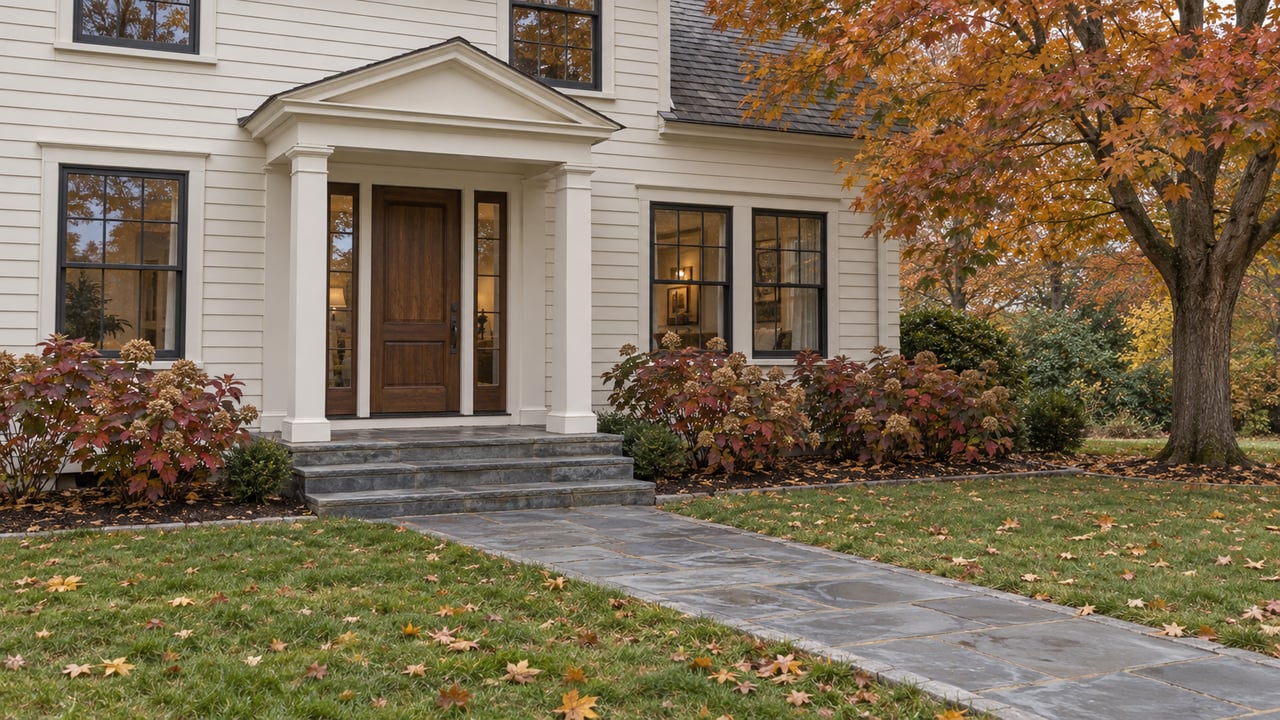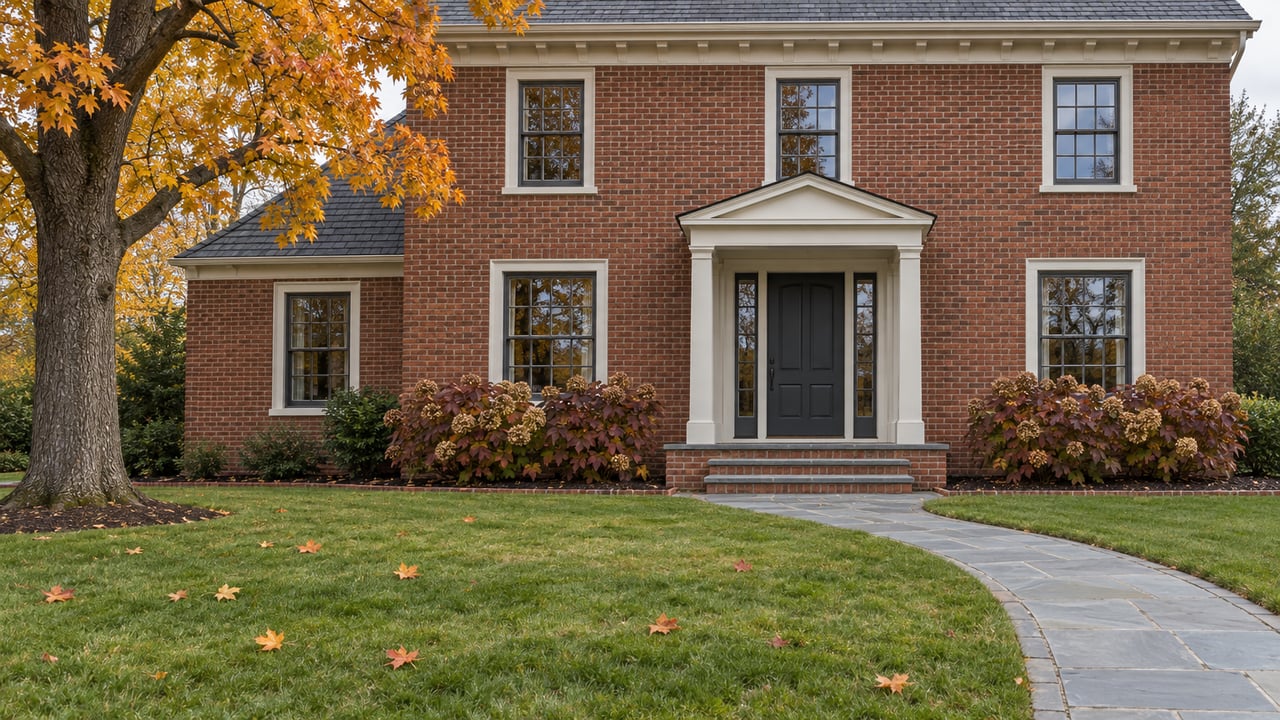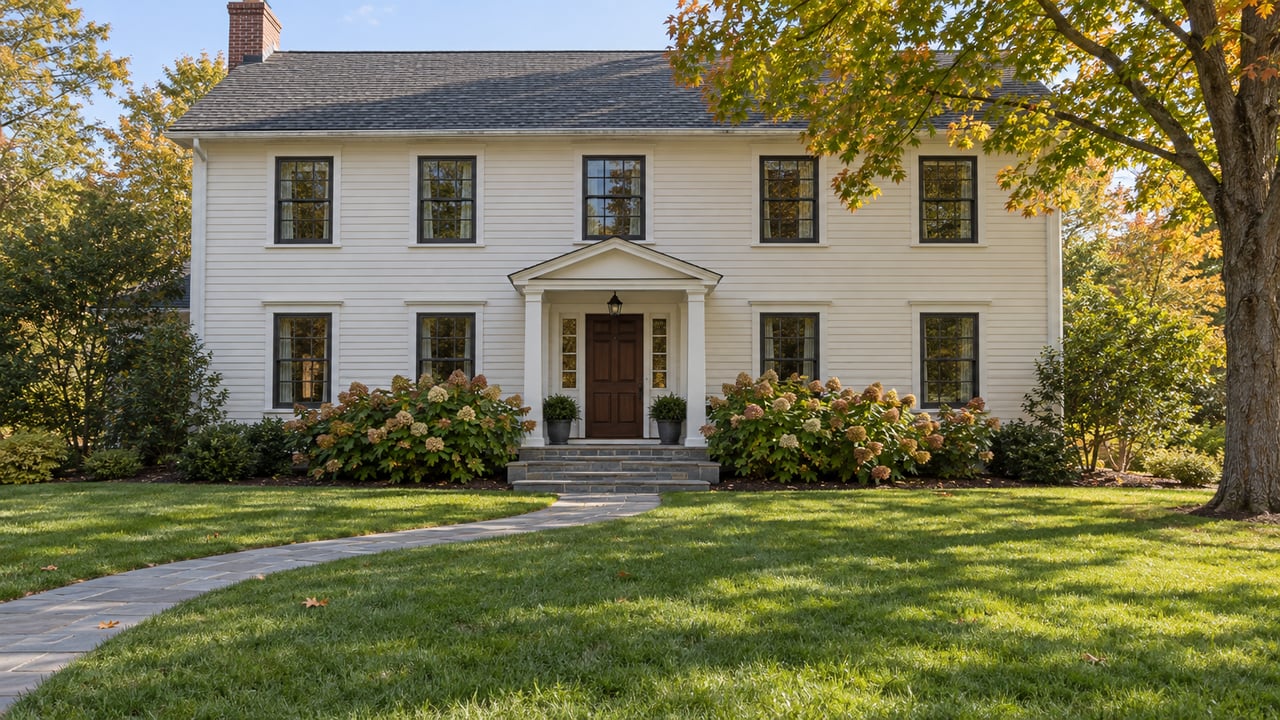
A house on Island Road in Ramsey does not look any different than it did last spring. Same brick colonial, same maple shading the side yard, same for-sale sign leaning against the mailbox post. What changed sits underneath the listing sheet. As of this year, that parcel sits inside a brand-new multifamily residential overlay zone the Borough adopted, as Zoneomics' current Ramsey zoning-code page confirms, under a state-imposed deadline, according to Ramsey Borough Council minutes, a fact no portal listing or price history chart will show a buyer scrolling from three towns over.
Anyone comparing Ramsey to Wyckoff, Mahwah, or Glen Rock usually starts with the same number: the median sale price on a national aggregator. This year that number is doing something strange in Ramsey. It fell. Meanwhile the price per square foot in the same market climbed by double digits. Both numbers come from the same pool of sales. The gap between them is the real story, and the zoning story underneath it explains why the gap exists and where it matters most.
The Signal and the Noise in Ramsey's Price Data
In March 2026, Ramsey's median sale price came in at $765,000, down 5.1 percent from the same month a year earlier. In that same month, the median price per square foot rose 13.3 percent to $446. Those two figures cannot both describe a market that is simply cooling. A falling median alongside a rising price per square foot usually means the mix of homes that sold changed, not that home values dropped.
The mechanism is volume. Only 11 homes sold in Ramsey that March, down from 12 the year before. Days on market averaged 55, down from 61. A dataset of 11 transactions moves on the strength of a handful of sales. If two or three smaller homes closed that month instead of the larger colonials that usually anchor the mix, the median drops even though every seller in town got more per square foot than they would have a year earlier. Online estimators compound the confusion. One investor-facing forecasting site put Ramsey's median home value at $898,388 as of mid-September 2026, while separate market-trend aggregators pegged the median list price closer to $799,000 to $894,000 depending on the snapshot date. None of these numbers are wrong exactly. They are measuring a market so thin that a single closing can swing the headline by tens of thousands of dollars.
For a buyer trying to decide between Ramsey and a neighboring town using portal medians alone, this is the trap. Ramsey's median is noisy in a way that a town with fifty monthly closings simply is not. Price per square foot, tracked over a longer window, is the steadier read on what is actually happening to value here.
What Changed in the Zoning Code While the Market Stayed the Same
The more durable story in Ramsey this year had nothing to do with buyer demand. It came out of a courtroom mediation.
Ramsey's own planning documents describe the Borough as a "vacant land adjustment municipality," according to The Local Lens, meaning it is close to fully built out and has little raw land left to develop. Under New Jersey's Fourth Round Affordable Housing Obligation, that status let Ramsey reduce its required unit count to a Realistic Development Potential of just 26 units, a fraction of what a town with open land might owe. But reaching that number still required the Borough to identify new sites, and doing so meant reopening a legal fight.
Ramsey's Housing Element and Fair Share Plan from June 2025 was challenged by the nonprofit Fair Share Housing Center and by a developer, North Franklin LLC. The two sides reached a mediation agreement on December 12, 2025, later approved by the assigned Superior Court judge. That settlement required Ramsey to designate overlay zones near mass transit and highway corridors, the standard the state applies statewide. The Borough Council introduced Ordinance 04-2026 and Ordinance 05-2026 in February 2026 to meet a March 15, 2026 deadline. Missing that date would have stripped Ramsey of its legal immunity from builder's remedy lawsuits, the mechanism that lets developers bypass local zoning entirely if a town falls out of compliance.
For details on the Island Road overlay, see The Ridgewood Blog's report. The two new districts are:
| Overlay District | Location | Size | Unit Capacity |
|---|---|---|---|
| R-5E | Island Road, near the Route 17 southbound exit | 17.2 acres | At least 70 affordable units, framework for up to 350 total units |
| R-5F | North Franklin Turnpike | Not specified in Borough filings | Part of the same 2026 compliance package, according to Ramsey Borough Council minutes |
These sit alongside two overlays Ramsey had already approved before this round: the R-5B district on the former Ramsey Lumber site, 7.1 acres approved in 2018 for 140 units, and the R-5C district at 425 Island Road, 8.57 acres created in June 2025 for 70 age-restricted units. Mayor Deirdre Dillon told residents at the February 11 council meeting that the Borough does not own property inside the new Island Road zone and has no current construction project planned there. Twenty-four letters of objection were logged before that meeting, largely from longtime Island Road residents concerned about density and process. As of this fall, the current zoning code confirms the Island Road Multifamily Residential Overlay District is adopted and in effect.
Why This Doesn't Touch the Rest of Ramsey the Same Way
The reason Ramsey's per-square-foot values have room to climb even as the median wobbles is the same reason the overlay zones landed on Island Road and North Franklin Turnpike specifically, rather than spreading across town. Ramsey has almost no vacant land left. Outside a small number of parcels the state and the Borough negotiated over, the existing single-family stock is not going to see a comparable rezoning event. Scarcity in the established neighborhoods is structural, not a market mood.
That scarcity shows up in property taxes too. Based on 2024 state tax data, Ramsey's average residential bill runs close to $15,094 a year, with an effective rate near 1.80 percent of home value. Glen Rock, a few miles east, carries a higher effective rate near 1.94 percent, while Ridgewood sits lower at roughly 1.75 percent. None of these differences are dramatic on their own, but they are the kind of detail that matters once a buyer is choosing between two towns with similar home prices and needs to know what the monthly number actually looks like.
What It Means If You're Comparing Ramsey to Other Towns
A buyer weighing Ramsey against Wyckoff or Mahwah on median price alone is comparing a number that moves on 11 sales a month against towns that may have a steadier transaction base. The more useful comparison is price per square foot over a longer window, paired with a specific question about any address near Route 17: does this parcel sit inside R-5E or R-5F. Everywhere else in Ramsey, the same land constraints that pushed the state's mediation onto two narrow corridors are the constraints keeping the rest of the town's inventory scarce and its per-square-foot values firm.
A Few Questions Worth Asking Directly
Does the new zoning mean construction is starting on Island Road right now? Not based on anything the Borough has stated. Mayor Dillon told the council in February 2026 that no project is currently proposed for the R-5E site and that control remains with the individual property owners.
How would I find out if a specific Ramsey address sits inside one of these overlays? The Borough's zoning map and current code list the R-5B, R-5C, R-5E, and R-5F districts by parcel. A title search or a call to the Borough's Building, Planning and Zoning office will confirm whether a given address falls inside one.
Does this affect my property taxes if I'm not near either corridor? The overlay ordinances themselves do not change the tax rate. Ramsey's effective rate is set at the municipal, county, and school level and applies borough-wide regardless of the overlay boundaries.
If you are looking at a property in Ramsey and want to know exactly what its address means under the current zoning map, or how its price per square foot compares to what similar homes are actually closing at this year, My Bergen House can walk through both with you before you write an offer.
This article is general information, not legal, tax or financial advice. Consult a qualified professional about your situation.