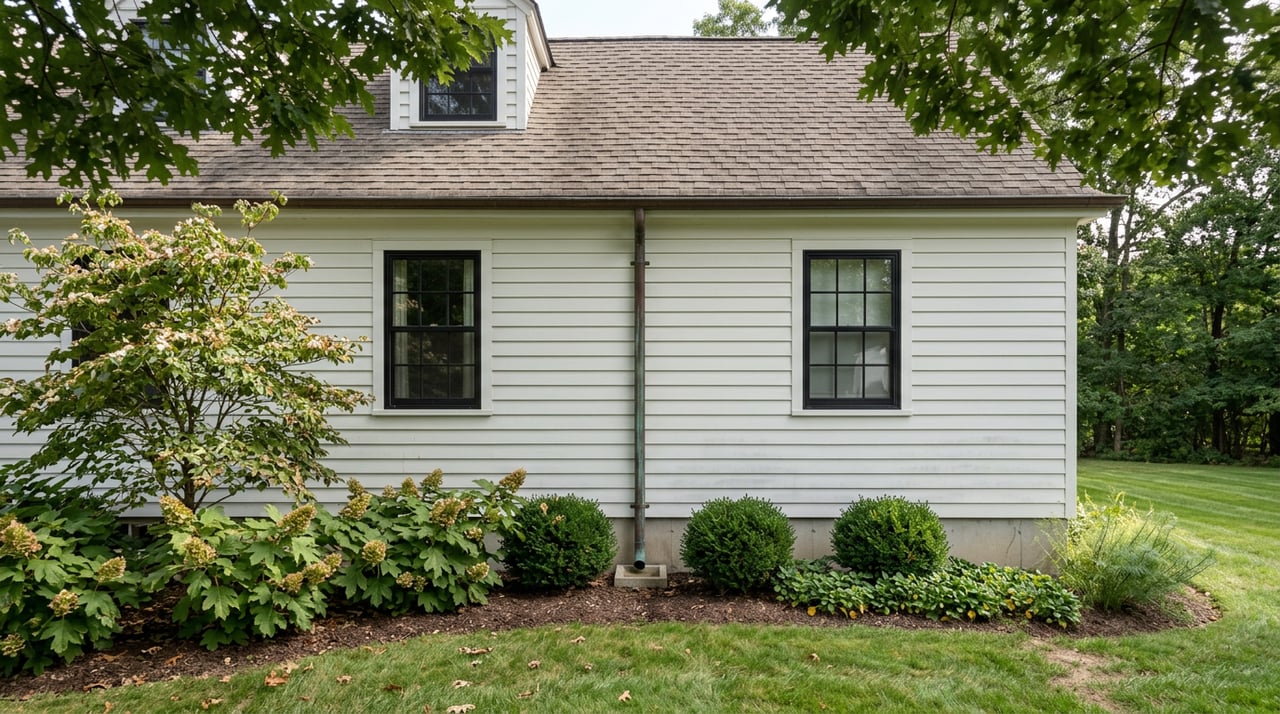
Scroll through active listings in Wyckoff's Sicomac section or along High Mountain Road this year and you'll keep running into the same reassuring phrase: updated septic system. It sits next to the new roof and the refinished floors, presented as one more box checked, one more reason the house is move-in ready. What those listings don't mention is that Wyckoff's own municipal code makes it unlawful to construct or maintain a septic tank, cesspool, or similar disposal facility anywhere in the township, with only a narrow exception for systems that were already in place before the town's public sewer lines arrived. A sale can be the exact event that closes that exception.
That's not a detail that shows up in a home inspection summary. It's buried in Chapter 157 of the township code, and it changes the math on any older home in town that still runs on a private system.
The Ordinance Underneath the Listing
Wyckoff spent the 1970s and 1980s building out a public sewer network specifically to get properties off individual septic systems. Bond ordinances adopted in 1969 and again in 1982 funded successive phases of that system, and the township's code still reflects the goal behind them. Wyckoff's sewer code states plainly that it is unlawful to construct or maintain any septic tank, cesspool, or similar facility in town except as the ordinance separately allows.
The allowance is for existing homes. Owners on streets where public sewer lines went in before January 1, 1977, or under two later contracts, were told they didn't have to rip out a working system and connect immediately. That grandfathering is the reason a 1960s Cape in an established section of town can still be running on a septic tank in 2026 without the township showing up at the door.
The Exemption Has a Trigger, and Selling the House Pulls It
Here's the part that rarely makes it into a listing description or a buyer's first walk-through. The ordinance doesn't say the exemption lasts forever. It lists specific conditions under which a grandfathered property loses its pass and becomes required to connect to the public sewer. One of them is the septic system needing substantial repair, as determined by the Wyckoff Board of Health. The other is broader, and it's the one that matters most to anyone buying or selling right now:
"There is a change of use, ownership, or occupancy of the building."
That's a direct line from the township code. A change of ownership is listed as its own independent trigger, separate from whether the septic system is failing. A perfectly functional system that has quietly served a Sicomac Road colonial for fifty years doesn't get to keep its grandfathered status just because it's still working. The exemption is tied to continuous ownership, not to the physical condition of the tank.
For a buyer, that means the question isn't only "does the septic system pass inspection." It's "does buying this house trigger a sewer connection requirement the current owner has never had to face."
Two Compliance Systems Stacked on One Sale
New Jersey doesn't have one statewide law forcing a septic inspection on every home sale. What it does have is a protocol, N.J.A.C. 7:9A-12.6, that governs how any septic inspection must be conducted when a property transfer happens, and the state Department of Environmental Protection recommends every buyer of a septic-served property secure one regardless of local rules. Layered on top of that is a specific statewide requirement that cesspools, the older style of pit-based disposal with no proper tank, must be replaced at time of sale. Other septic designs that predate current code aren't required to be upgraded just because they're old, only if they fail. Franklin Lakes, a neighboring town operating under the identical state regulation, spells this distinction out clearly on its own township FAQ page.
Wyckoff adds a second layer that most sellers in town have never had to think about, because most Wyckoff properties connected to public sewer decades ago and this whole question is moot for them. But for the pocket of older homes still running on legacy systems, a property-transfer inspection, if conducted, is governed by the state protocol, while a sale triggers the township's own ownership-change clause, which is potentially the more expensive of the two.
What the Numbers Actually Look Like
| Event | Typical Cost | What Triggers It |
|---|---|---|
| Standard property-transfer septic inspection | $500 to $2,000 | When an inspection is conducted during a property transfer |
| Cesspool replacement | Often bundled into a $15,000 to $35,000 full system project | Required at sale if the inspection finds a cesspool specifically |
| Full septic system replacement | $15,000 to $35,000 | A failed inspection, a system needing substantial repair, or a lender requirement |
| Public sewer connection | Determined by the township on a case-by-case basis | Change of ownership on a grandfathered Wyckoff property, per local ordinance |
Most mortgage lenders won't approve financing on a home with a failing septic system, which narrows a seller's buyer pool to cash offers or repairs completed before closing. Septic Finder NJ says septic inspections in New Jersey are generally considered valid for about two years, so a seller who had one done recently may already be covered on that front. What a recent inspection doesn't resolve is the township's separate question about connection status, since that's a determination the Wyckoff Board of Health or Construction Department makes, not something a private septic inspector certifies.
What the Housing Numbers Mean for This
Wyckoff isn't a market where a five-figure surprise gets absorbed without notice. Sale prices across town in the first half of 2026 have generally clustered in the $1.1 million to $1.3 million range depending on the data source and time window, and homes here have typically moved in a matter of weeks rather than months. On a transaction at that scale, a $20,000 septic replacement is a rounding error compared to the purchase price. A sewer connection requirement that a buyer didn't know to ask about, discovered mid-contract, is a very different conversation, especially if it affects financing timelines or requires township permits before a closing date that's already been set.
This is exactly the kind of local mechanism a national market report never surfaces, because it lives in one town's code, not in county-level housing data.
Before You Write or Accept an Offer
- If the listing mentions a septic system, or if the home is in an older section of town, ask directly whether the property sits on a grandfathered system and whether the township has been notified of the sale.
- Request any septic pumping or inspection records the current owner has on file. New Jersey's inspection protocol applies regardless of whether the town separately requires one.
- Contact the Wyckoff Board of Health or Construction Department before signing anything, to confirm whether a change of ownership on this specific property triggers a mandatory sewer connection.
- Loop in a real estate attorney early. A municipal compliance question like this runs on a different timeline than a standard home inspection contingency, and it's not something a financing contingency alone protects against.
- If you're selling, get ahead of it. A pre-listing inquiry to the township costs you a phone call. Finding out mid-contract costs you a closing date.
Common Questions
Does every home in Wyckoff have a septic system? No. Most of the township connected to public sewer decades ago. Legacy systems are concentrated in specific older sections where properties predate the sewer bond contracts.
Is a septic inspection legally required to sell in Wyckoff? New Jersey doesn't have one statewide law mandating an inspection for every sale, but the state's transfer protocol governs any inspection that does happen, and lenders routinely require one before approving financing on a septic-served home.
If the septic system is working fine, does the ordinance still apply? Based on the township code's own language, yes. A change of ownership is listed as a trigger independent of the system's physical condition.
Buying or selling a home with a private septic system in Wyckoff isn't a reason to walk away from the deal. It's a reason to ask the right question before the deal is already moving. If you're weighing a purchase in one of Wyckoff's older sections, or you're getting ready to list a home that's been on a private system for decades, the team at My Bergen House can walk you through what the township will actually require and help you get ahead of it. If you're on the selling side, that conversation starts with knowing what your home is worth today. Get Your Home Valuation and let's talk through what a septic-served property means for your timeline before it's part of a signed contract.
This article is general information, not legal, tax or financial advice. Consult a qualified professional about your situation.